
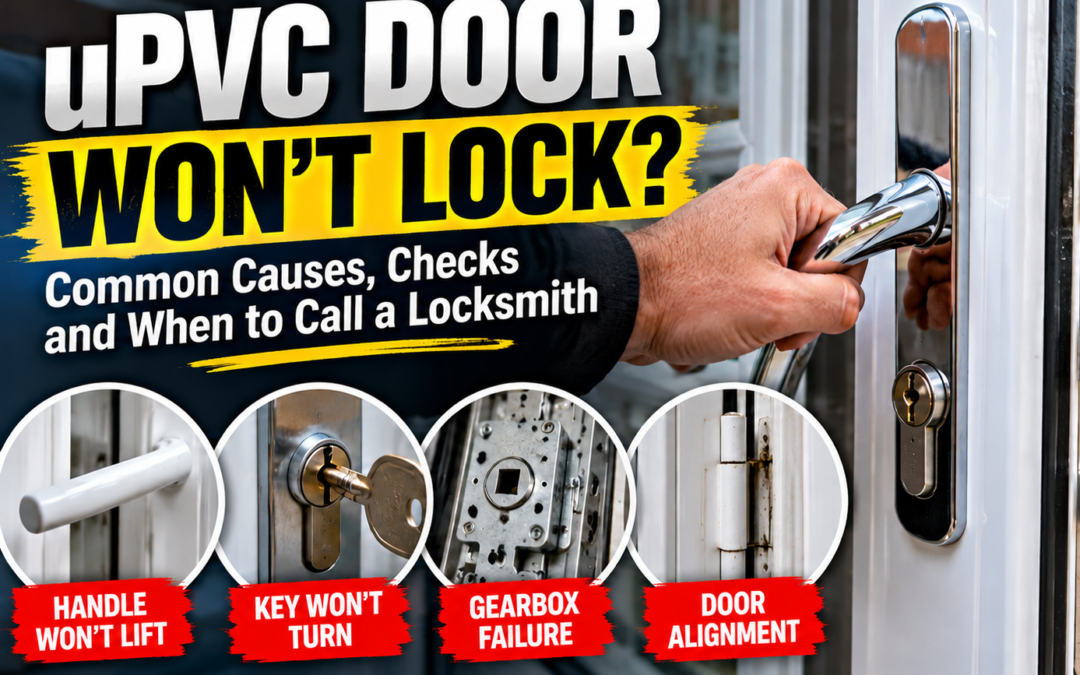
uPVC Door Won't Lock? How to Identify the Problem Before It Gets Worse
By Andy – Emergency Local Locksmith | Harlow, Essex
You've come home, pulled your front door shut and lifted the handle as usual. Except this time, something doesn't feel right. The handle won't lift fully, the key refuses to turn, or you find yourself pushing against the door just to get it locked.
If that sounds familiar, you're not alone. As a locksmith working across Harlow, Essex and Hertfordshire for over 20 years, I've dealt with plenty of uPVC and composite doors that have suddenly become difficult to lock.
The good news is that a uPVC door that won't lock doesn't automatically need a new lock or a replacement door. Sometimes the problem is relatively straightforward. Other times, it's a warning that the internal mechanism is beginning to fail.
Here's how to recognise the difference and what you can safely check before calling a locksmith.
Why Has My uPVC Door Suddenly Stopped Locking?
Most modern uPVC doors use a multipoint locking system. When you lift the handle, several locking points along the edge of the door engage with the frame. Turning the key then secures the mechanism.
Although the system looks fairly simple from the outside, several components have to work together correctly.
A problem with the hinges, door alignment, handle, gearbox or Euro cylinder can prevent the door from locking properly. That's why replacing the cylinder isn't always the answer.
The first thing I want to know when somebody calls is exactly what happens when they try to lock the door.
1. The Door Handle Won't Lift Properly
This is one of the most useful symptoms when diagnosing a faulty uPVC door.
If the handle becomes increasingly difficult to lift, the multipoint locking points may be meeting resistance as they enter the keeps on the door frame.
Sometimes the door has dropped slightly on its hinges. In other cases, the locking mechanism itself has become worn or damaged.
A simple check you can try
If the door is already open, gently lift the handle without using the key. Does it move smoothly, or does it still feel stiff?
If the handle works normally with the door open but becomes difficult when the door is closed, alignment or pressure against the keeps is a possibility.
If the handle remains stiff with the door open, the problem may be within the mechanism or handle assembly.
Important: Only carry out this check if the door is safely open and you can avoid accidentally locking yourself out. Don't force the handle or turn the key against heavy resistance.
2. The Key Won't Turn in the uPVC Door Lock
A key that suddenly becomes difficult to turn can make you think the cylinder has failed. Sometimes that's correct, but it isn't the only possibility.
The cylinder may be worn, the key could be damaged, or pressure from the multipoint mechanism may be preventing the lock from operating properly.
I've attended doors where the customer was convinced they needed a new cylinder, only to find that the door was out of alignment.
What should you check?
Start by looking at the key. Is it bent, badly worn or damaged? If you have a spare key in good condition, you can carefully check whether it behaves differently.
If the key won't turn, don't use pliers or additional force. A snapped key can make an already inconvenient problem considerably worse.
Where the cause isn't obvious, the sensible approach is to check the cylinder and complete locking mechanism before replacing anything.
3. The Handle Goes Floppy or Spins Without Operating the Lock
A floppy handle is different from one that's simply stiff.
If the handle suddenly drops, spins or stops operating the latch, there may be a problem with the spindle, handle components or central gearbox.
The gearbox is the part of many multipoint locking systems that transfers movement from the handle to the locking points.
When an internal component fails, the handle may no longer operate the door as expected.
Does this mean the whole multipoint lock needs replacing?
Not necessarily.
Some locking systems have replaceable centre gearboxes. Others may need a larger section of the mechanism replacing, depending on the make, design and availability of compatible parts.
It's worth identifying the actual failure before ordering anything. Two mechanisms can look similar from the outside while having different dimensions and operating arrangements.
4. The Door Locks When Open but Not When Closed
This is a particularly useful clue.
If the mechanism operates smoothly with the door open but becomes difficult when the door is closed, the locking points may not be lining up correctly with the keeps.
There are several possible reasons, including hinge movement, door alignment, worn components or changes in how the door sits against its seals.
The temptation is to lift the handle harder or pull the door towards you while turning the key.
That might work temporarily, but it can place additional pressure on the locking mechanism.
My advice: If the door needs force to lock, arrange for the cause to be checked before the gearbox suffers unnecessary wear.
5. The uPVC Door Has Jammed Shut
A jammed door needs a different approach from a door that's merely stiff.
If the handle won't move, the key turns without releasing the door, or the mechanism appears completely seized, an internal component may have failed.
At this stage, repeatedly pulling the handle or trying to force the door open can damage the hardware or surrounding frame.
A locksmith can assess the mechanism and determine the most appropriate way to regain access.
I always consider non-destructive methods wherever practical. However, the approach depends on the particular lock, door and fault involved.
Is It the Gearbox, Cylinder or Door Alignment?
Although the symptoms overlap, the way the door behaves can provide useful clues.
| What you're experiencing | Possible cause |
|---|---|
| Handle lifts easily when open but not when closed | Door alignment or keeps |
| Handle is stiff whether the door is open or closed | Multipoint mechanism or handle components |
| Key is difficult to insert or remove | Key or cylinder wear |
| Handle spins or drops without operating the latch | Spindle, handle or gearbox fault |
| Key turns but the door remains locked | Possible mechanism or gearbox failure |
| Door needs lifting or pulling to lock | Alignment, hinge or locking-point pressure |
These are indications, not a guaranteed diagnosis. More than one fault can produce the same symptom.
Can You Repair a uPVC Door Lock Without Replacing the Whole Door?
In many cases, yes.
A uPVC door is made up of several separate components. Depending on the fault, it may be possible to repair or replace the affected part while retaining the rest of the door.
For example, a worn Euro cylinder doesn't automatically mean the multipoint strip needs replacing. Similarly, an alignment problem may not require a new gearbox if the existing mechanism is still serviceable.
There are situations where replacement parts are difficult to obtain, particularly with older locking systems. The correct option depends on what is fitted and the condition of the remaining hardware.
My approach is to identify the problem first, then explain the practical repair options rather than automatically recommend a complete replacement.
For more information about the work involved, visit my uPVC and composite door repairs page.
Three Things I Would Avoid Doing to a Faulty uPVC Door
Don't force the handle upwards
If the locking points are meeting resistance, additional force may damage components inside the mechanism.
Don't assume a new cylinder will solve everything
The cylinder is only one part of the locking system. Changing it won't correct a dropped door or repair a failed gearbox.
Don't leave an unreliable door until it jams completely
If you regularly struggle to lock the door, it's worth arranging an inspection while the mechanism still operates. A fault that's developing may become more inconvenient if ignored.
What Information Helps a Locksmith Diagnose the Problem?
When someone calls me about a faulty uPVC door, a short explanation can be more helpful than simply saying the lock is broken.
I usually want to know whether the door is currently open or closed, whether the handle lifts normally, and what happens when the key is turned.
A photograph of the door handle and the locking strip along the door edge can also help identify the type of mechanism.
If you're unsure what the parts are called, that's absolutely fine. Just describe what the door is doing.
uPVC Door Repairs in Harlow, Essex and Hertfordshire
I'm Andy, the independent locksmith behind Emergency Local Locksmith. I provide emergency and planned locksmith work across Harlow and surrounding areas, including Epping, Sawbridgeworth, Bishop's Stortford, Hertford, Ware, Hoddesdon and Cheshunt.
I work on uPVC and composite door locking problems, including faulty gearboxes, stiff handles, damaged cylinders and alignment-related issues.
You speak directly to me rather than a national call centre. I provide 24/7 emergency assistance, and there's no separate call-out fee. The work and likely costs are discussed before proceeding.
If your door has started becoming difficult to lock, you can call me or send a photograph of the mechanism.
Call Andy on 07939 030543
Contact Emergency Local Locksmith
Frequently Asked Questions
Why won't my uPVC door handle lift all the way?
The locking points may be meeting resistance because the door is out of alignment, or there may be wear or damage within the multipoint mechanism. If the handle operates smoothly with the door open but not when closed, alignment is one possible cause.
Can a dropped uPVC door stop the key from turning?
Yes. If the locking points are not engaging correctly, pressure on the mechanism can make it difficult to complete the locking operation with the key.
How do I know if my uPVC door gearbox has failed?
A failed gearbox can cause a floppy handle, prevent the locking points from moving or leave the door jammed. However, similar symptoms can arise from other faults, so the mechanism should be checked before replacing parts.
Can I still use a uPVC door if the handle is stiff?
A stiff handle is a warning sign. Continuing to force it may cause further damage. If the door cannot be secured reliably, it should be treated as a security concern and inspected promptly.
Can a locksmith repair a jammed uPVC door?
Yes, locksmiths experienced with multipoint mechanisms can assess jammed uPVC doors and determine suitable entry and repair options. Whether individual components can be retained depends on the fault and the mechanism fitted.
Do I need a new uPVC door if the lock is broken?
Usually, a faulty lock alone does not mean the entire door must be replaced. Many faults involve replaceable hardware, although the condition and availability of parts must be assessed.
About the author
Andy is the owner of Emergency Local Locksmith, an independent, Harlow-based mobile locksmith business with over 20 years of hands-on experience. He works on domestic and commercial locks, uPVC and composite door mechanisms, lockouts and security upgrades throughout West Essex and East Hertfordshire.


