
This manual (written by the local locksmiths) helps Harlow homeowners replace ordinary door locks safely. We cover step-by-step repairs for Euro cylinder locks, mortice locks, rim (Yale) night latches, and multipoint locks.
In every section, the required tools, approximate time and challenge are mentioned. There are also safety tips, a short cost breakdown, maintenance recommendations, and the timing of a professional call-in.
Any lock repair can be a challenge when done improperly. Carefully follow these instructions and be patient. Always use the appropriate tools for each lock type, and wear safety glasses at all times to protect your eyes. If you feel you lack the skills to do a job safely, call in a certified locksmith in Essex.




Repair of Cylinders (Euro Cylinder) Locks
Tools: Phillips screwdriver, flat screwdriver, replacement cylinder, lubricant (graphite or spray), measuring tape.
Time: 10–20 minutes. Competency: Easy to moderate.
Take off Cylinder
Open door. Find the fixing screw at the side of the door (it should be in line with the cylinder). Unscrew it. Insert the key, then rotate it a little to position the cam, and slowly draw the cylinder.
Check the Insides
Look for the debris or damage. If it is just stiff, spray a graphite lubricant or sprinkle some graphite powder into the key and rub it together by turning the key back and forth.
If the pins are worn or broken, the cylinder should be replaced.
Replace the Lock
To replace, measure the length of the old cylinder, including the fixing screw hole at each end. Buy a similar Euro cylinder, the size would be typical 70mm: 30/40.
Insert the new cylinder with the key in the neutral position.
Reassemble It
Slide and tighten with the fixing screw. Check by turning the key and locking/unlocking on either side. Make sure that the key rotates freely everywhere.
Avoid:
Do not push a stuck cylinder, as it may break. If you are unsure of the lock's size, it is wise to get help from a locksmith.
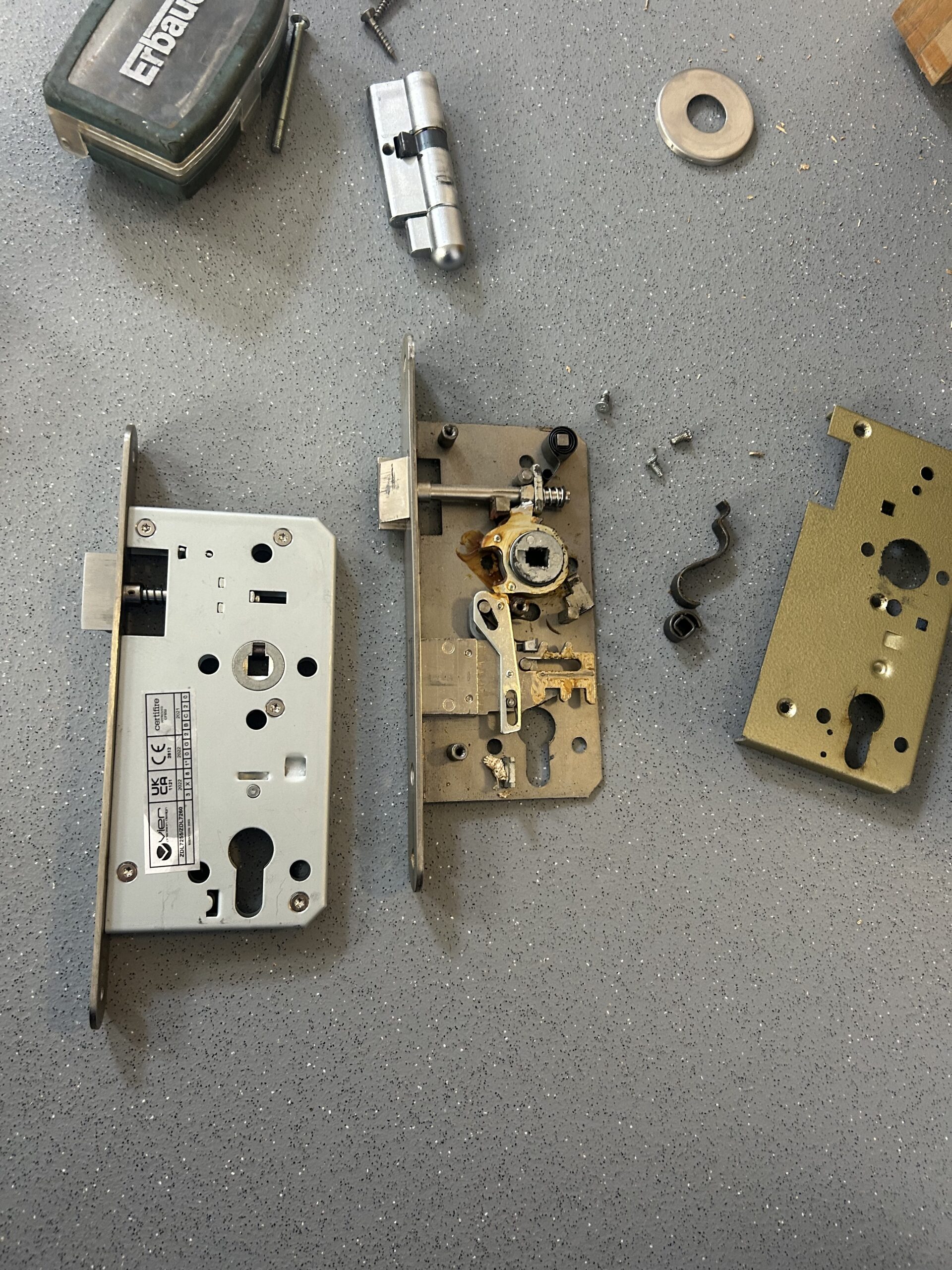
Mortice Lock Repair
Tools: screwdriver set, pliers, chisels (when needed), replacement parts (springs, latch bolt, or new lock).
Time: 30–60 minutes. Difficulty: Moderate.
Access the Lock Body
To open this lock, start by removing the screws on the faceplate at the edge of the door.
Then unscrew the lock from the door. In the event of a sashlock or deadlock, the mortice lock may need to be pulled out from the inside of the door.
Tester
Test the springs and bolts. To clean the parts, clean the latch or deadbolt in case it is sticking. Spray lubricant on the internal parts to help them move more freely.
Repair or Replace Components
Small components (springs, catch plates) can be replaced. If the latch bolt is worn, replace it. In many cases, replace the entire mortice lock.
Purchase a mortice lock of a matching size (e.g. BS-3621) when you want to lock the front door.
Installation of the Lock
This is done by inserting the lock body into the mortise pocket in the door. Install using a screw through the faceplate. Install and remove handles and escutcheons.
Operation of the test
Turn the key a few times. The deadbolt and the latch have to move freely. Otherwise, fine-tune strikes on the frame (below).
Difficulty Hint:
Mortice locks are harder to fit. If the door edge has been cut or the lock is very old, call a locksmith.
Rim Night Latch (Yale) Repair
Tools: Screwdrivers, pliers, lubricant, replacement night latch.
Time: 15–30 minutes. Difficulty: Easy.
Remove the Night Latch
Unscrew the two screws that hold the latch on the door surface. The exterior cylinder assembly and the interior knob will pull off easily after this.
Check/Change the Cylinder or Latch
If the key sticks, lubricate the night latch cylinder. If the cylinder or latch mechanism is worn, install a new replacement night latch. These are commonly available in the UK.
Reattach and Secure
Attach the latch body to the door again and screw it in place. Install the knobs or thumbturn back again.
Check the Lock
Turn the key and the thumbturn on and off. The door should also close and open the latch correctly. Make any adjustments to the strike plate on the frame (see Safety Checklist below).
Night latches are mounted on the surface and are typically basic. For the older decorative type or a badly corroded one, it can be easily replaced by matching the size.
uPVC/Composite Doors Multipoint Lock Repair
Tools: Screwdrivers, hex keys/Allen keys (for adjusters), lubricant (silicone spray), replacement gearbox/handles as needed.
Time: 30–45 minutes. Challenges: Medium to extreme.
Diagnose
Diagnose the problem. The core problems with this lock type are usually handle drops, a stiff door, or a lock that doesn't latch. Frequently brought about by the out-of-alignment of striker plates or broken gearboxes.
Adjust Handles
Attempt to loosen/tighten the grub screws of the handle rise. Silicone spray should be applied to the locking hinges and rods.
Check Striker Plates
The checks (on the door frame) can be out of place due to weather or movement. Mark all dead-locking points, which jam them and file them a little to allow the bolts to slide into their place.
Change the Gearbox (where necessary)
If a handle drops and the lock fails to open, the internal gearbox may be worn out. What you can do is unhook the bottom roller pin, unhook the pin and remove the handle.
Loosen the screwdriver on the edge of the door and remove the gearbox unit. Install a new gearbox of a similar type.
Reassembling and testing
Re-connect the lock case and handle. Test the lock by using it several times, including locking and unlocking. Make sure the handles lift the latch to the full extent and that the door closes easily.
Multipoint locks may be complicated. If the repair is too challenging—such as drilling rivets or installing the gearbox—hire a professional to avoid damaging the door.
When it is Necessary to Call a Locksmith
Always use eye protection when working on doors to prevent injury from flying debris or tools. Ensure you use each tool as intended and keep hands clear of moving parts to avoid cuts or slips.
Never use force if a screw or key is stuck. Loosen it by gently tapping or using an appropriate lubricant (such as WD-40 or graphite), as forcing can cause breakage or injury.
Lock-Picking Alarm
Do not attempt to pick or drill locks you are not good at. This can shatter the lock into bits.
Electrical Safety
Before working on any door with an electronic lock, always disconnect the power to avoid electrical shock or damage.
A professional locksmith should be called if: you suspect the lock mechanism is faulty (broken springs or a key snapped inside); the door is warped; you are working on a security door (uPVC multipoint or steel-framed); or you lack the necessary experience. Attempting repair in these cases can compromise safety and security.
A locksmith can ensure that security standards are met.
Post Repair Check
Once the door is repaired, ensure it locks and the bolts fit well. Make sure there was no disturbed weatherstripping (to keep the cold, wet winters in Harlow insulated).
Costs of Repairs and Parts
In the UK (2026), expect rough costs (parts only) as follows: A Euro cylinder costs £20–£65 a mortice lock £40–£100 a rim night latch £30–£70 a multipoint lock gearbox £50–£150. You can spend more money on high-security locks or BS-rated locks.
In Essex, locksmith call-out charges are normally between 60 and 100 pounds, including diagnosis/repair charge, parts and VAT. Replacing a complete lock (parts + labour) can cost around £100-200, depending on the type. A quote is always to be taken before work.
Conclusion
This manual is expected to help Harlow residents overcome most lock-related problems. It is always better to keep in mind that, in case of doubt, it is safer to call a certified locksmith in Harlow or in Essex, rather than break the door or have no security at all. Be safe and keep secure!
